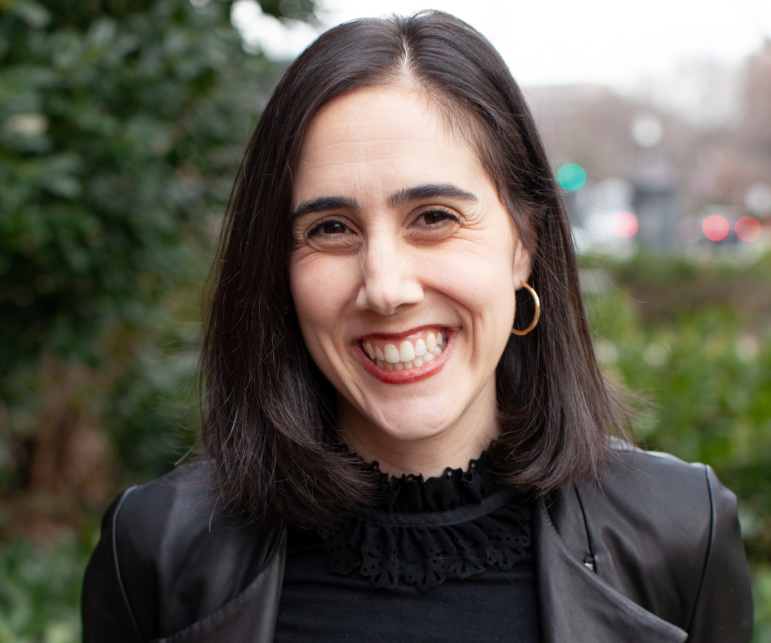
See below for JUFJ Rabbi in Residence Rabbi Miriam’s speech at the AFL-CIO MLK convening in Baltimore
“And every first-born in the land of Egypt shall die, from the first-born of Pharaoh who sits on his throne to the first-born of the slave girl who is behind the millstones; and all the first-born of the cattle. And there shall be a loud cry in all the land of Egypt, such as has never been or will ever be again.”
Jews will read these words in synagogues around the world this week. Every firstborn in the land of Egypt shall die. From rich to poor, from ruler to servant, everyone. Not one firstborn child will be spared. It’s the last of the ten plagues and it’s the most horrific of the plagues.
There’s a story that the ancient rabbis tell us about this plague:
The firstborns, they say, did not sit idly by. They heard the decree against them and they went to their own fathers and they begged: Didn’t you hear what Moses said? If Pharaoh doesn’t let the Israelites go we will die. But their fathers respond, even if all the Egyptians die we still wouldn’t let the Israelites go. So the firstborns go to Pharoah and they say, Please. Let the Israelites go. If you don’t let them go, catastrophe will come to us and to you. But, as if a death sentence isn’t enough, Pharaoh only punishes the firstborns for their actions.
We spend so much time focusing on Pharaoh, on the ruthless leader, that we forget about everyone else in the story. We forget about Egyptians who had no water when the Nile turned to blood or the livelihoods lost when the livestock were plagued. And we forget about the bystanders, the fathers in this story – the Egyptians who didn’t act and didn’t rise up because maybe they felt their voices weren’t worthwhile or their power wasn’t strong enough or their lives weren’t directly affected.
But the firstborns of Egypt understood something: they understood that the actions of their leaders didn’t only affect the Israelites, their own lives were on the line. They understood that to make change they needed to stand up for their own freedoms and the freedoms of others. They understood what it meant to be bold and risk punishment.
In April 1967 Dr. King said,
We are now faced with the fact that tomorrow is today. We are confronted with the fierce urgency of now. In this unfolding conundrum of life and history there is such a thing as being too late. Procrastination is still the thief of time…Over the bleached bones and jumbled residue of numerous civilizations are written the pathetic words: “Too late.”…We still have a choice today: nonviolent coexistence or violent co-annihilation.
It was too late for firstborns of Egypt. It was too late for Freddie Gray. It was too late for Renee Good. It was too late for so many of our neighbors, our friends, our family. But as we stand here today we also have a choice: Do we sit idly by? Or do we stand up?
Just a few verses after God first decrees the death of the firstborn Egyptians, before they are even struck down, God tells the Israelites,
You shall protect the matzot, for on this very day I brought your ranks out of the land of Egypt.
The matzot, or the matzah is the bread of affliction, the wafer-like crackers we eat on Passover. Matzah, we’re told, reminds us of the Israelites’ need to flee Egypt in a hurry. We eat matzah on Passover because they didn’t have time to let their bread rise. But then why protect the matzah as this verse states?
There’s a commentary on this verse that says, no, no, don’t read this verse as “protect the matzot, the bread of affliction,” read it as, “you shall protect the mitzvot, the commandments, the good deeds.” Just as we do not want the matzah to become invalid by letting it rise for too long and letting it become leavened bread, so too, we don’t want any of our mitzvot, our commandments and deeds to become invalid. In other words, this commentary says, “If the opportunity to do a mitzvah, a deed, presents itself to you, do it immediately.” If we wait too long, we’ll miss our chance.
And so, let’s not wait. Let’s protect each other today through our deeds and through our actions. Let’s make sure that tomorrow is not too late for another living soul.