
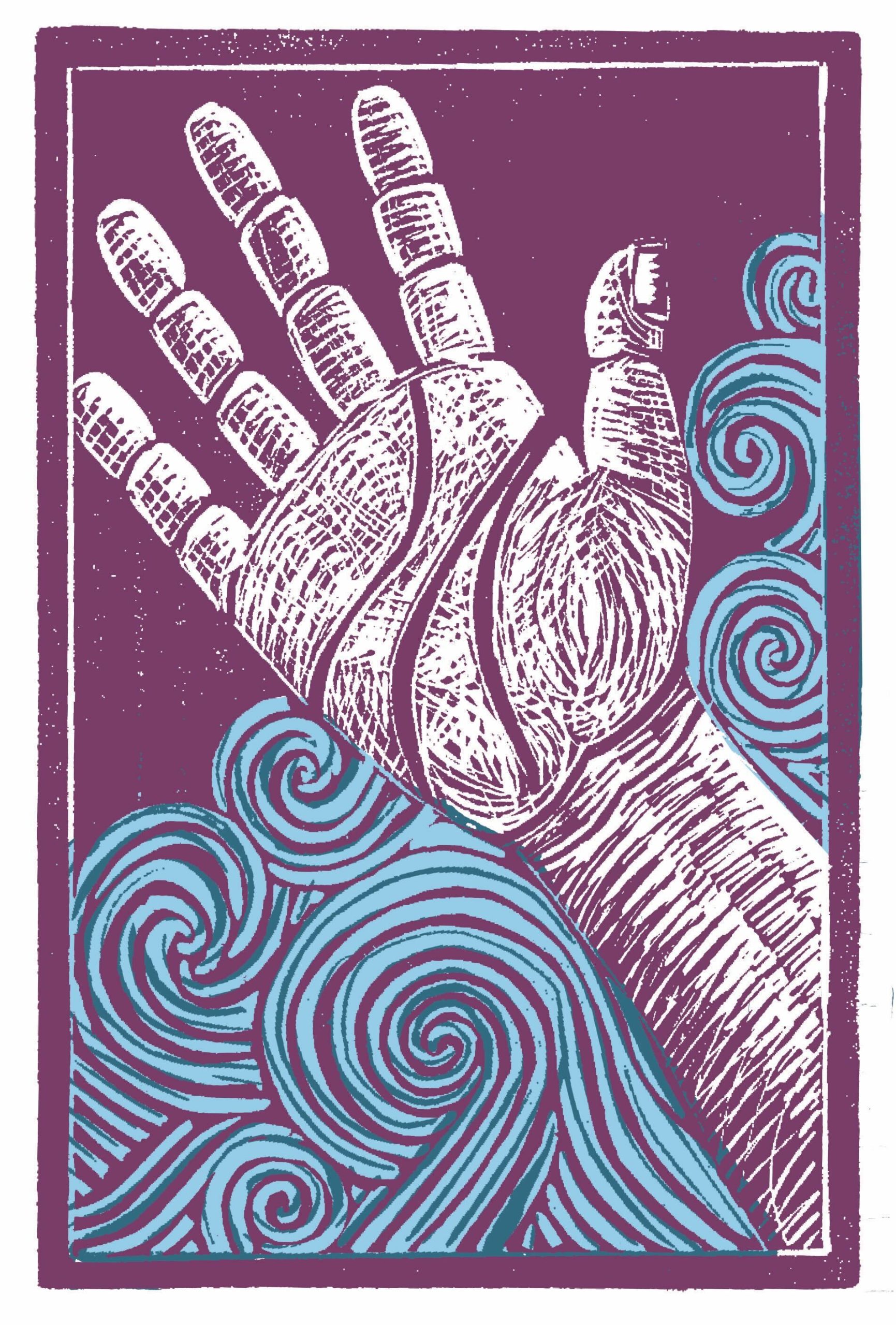
Art by Raina Fox
Until All of Us Are Free
JUFJ’s Labor Seder and Social Justice Seder
Sunday, March 22, 2026 | 4 Nisan 5786
3:30 – 5:30 PM
Temple Sinai, DC | Beth Am Synagogue, Baltimore
Each spring, the JUFJ community comes together to retell the story of Passover and take action on issues in our region. Passover reminds us that our generation, like all generations, has an urgent responsibility to work toward collective liberation right now.
On March 22, more than 360 people joined JUFJ’s “Until All of Us are Free” seders. We are grateful to be in community with so many people who understand that the work of liberation remains ongoing, and that we must choose every day to continue doing that work. Thank you to everyone who made the seders possible! You can keep our shared work going by bringing our Haggadah to your seder. You are welcome to include any portion of it, or the entire thing, in your own Passover observance. We are also sharing the song sheets from the seders.
Thank you to our 2026 seder sponsors
Updated March 20, 2026
Elijah
1199 SEIU
Am Kolel Jewish Renewal Community
Ruth Goodman
Liberator
Adas Israel Congregation
Adat Shalom Reconstructionist Congregation
AFSCME Maryland Council 3
Beth Am Synagogue
Chizuk Amuno Congregation
DC Fiscal Policy Institute
Metropolitan Washington Council, AFL-CIO
SEIU Local 500
Temple Sinai
Washington Teachers’ Union
Jody & Sheila Harburger
Wendy Kahn & Marty Burns
Krieger-Cohen Family
Ed & Nancy Kutler
Storyteller
BHC Justice
DMV Working Families Party
First Shift Justice Project
Interfaith Power & Light (DC.Md.NoVa)
Jewish Labor Committee
Debbie & Michael Amster
Lisa & Elad Firnberg
Diane Gardsbane & Paul Sully
Debbie Goldman
Sally T Grant
Jerry Kickenson
Gabe Kravitz & Yael Smiley
Rabbi Gilah Langner & David Drelich
Anna Tubiash Levy
Andy Miller & Sandra Dzija
Anne & Robert Molofsky
Ed Rehfeld
Joanna Silver
Carol Stern & Miriam Eisenstein
Laborer
Anonymous (3)
The Baltimore Ethical Society
Baltimore Teachers Union
Bet Mishpachah
B’nai Israel Congregation
Bolton Street Synagogue
Chevrei Tzedek Congregation
Kol HaLev
Unite Here Local 7
Robert Barkin
Rebecca Barson
David M. Friedman
Heide Fuchs
Abby Glassberg & Frank Staines
Cantor George & Ricki Henschel
Ann Hoffman
Dan Mauer & Shoshana Gitlin
Josh & Nicole Mintz
Sally & Bob Oetting
Cindy Paradies
Susan Russell
Shelley Sadowsky & Jerry Gross
Sally J. Scott
Peter Winkler & Barbara Kraft
We need your help! This year there are multiple ways to be involved in Seder planning. Please read below for descriptions of each leader team.
Haggadah Team (Social Justice & Labor Seders)
This is a cross-jurisdictional team. Join the Haggadah team if you enjoy writing, are excited about Jewish content, and have knowledge about or passion toward upholding democratic norms and working against authoritarian regimes. This team will start meeting in early January and will meet every other week through early March.
Program Teams
Each Seder will have its own program team. These teams will work on things such as: choosing and finding local speakers whose work or expertise is related to the theme, deciding on the flow of the Seder (such as which parts of the Haggadah will be read out loud and who will read them), creating a minute-by-minute for the event, deciding what role the table captains will take on, etc. This team will start meeting mid-February and will meet every other week through the end of March.
Logistics Team
Each Seder will have its own logistics team. The work of the logistics teams will include but not be limited to: making a plan for set up and clean up, figuring out what items need to be at the venues, deciding on what kind of food there will be and how to set it up, coordinating shopping for food/drink items if needed, etc. This team will start meeting mid-February and will meet every other week through the end of March.
Please fill out the form below to let us know which team(s) you are interested in joining.
Seder Resources
Each spring from 2002 to 2019, the JUFJ community came together to retell the story of Passover and take action on local issues in our community. In 2020, our seders were canceled at the last minute due to the COVID-19 pandemic, but we look forward to resuming them in 2024.
We have collected the Haggadah (ritual book) from almost all of these Labor Seders in DC (2005-2020) and Social Justice Seders in Baltimore (2014-2020) and made them available to download for your use at home in your own seders. Our 2020 Haggadahs are also available in online interactive form.
We hope these resources will enrich your holiday and help make critical change in our community. Chag Pesach sameach / Happy Passover!
If you are interested in helping to plan future seders, please contact our Program Director, Lindsay Morris (lindsay.morris@jufj.org).
Haggadot are available to download for almost all of our seders. For the first three Labor Seders, JUFJ used a Haggadah from the Jewish Labor Committee, rather than creating our own. Thank you to Erica Allen and Rabbi Gerry Serotta for helping us complete this collection of Haggadot in 2023!

The 2020 Labor Seder, And We Cry Out, was canceled due to the COVID-19 pandemic. JUFJ staff created an online interactive Haggadah for use in people’s home seders, including song videos, downloadable supplements, and more.

The 2020 Social Justice Seder, No Time To Care: A Plague on Our Communities, was canceled due to the COVID-19 pandemic. JUFJ staff created an online interactive Haggadah for use in people’s home seders, including downloadable supplements, and more. Since then, the Time To Care Coalition successfully pushed to pass a paid family and medical leave law for Maryland!

The 2019 Social Justice Seder, Common Resource, Common Need: A Seder on Water Justice, explored the fight for water justice in Baltimore and the sacred role of water in Jewish traditions.

The 2019 Labor Seder, In Every Generation, celebrated 50 years since the first Freedom Seder and 20 years of JUFJ.

The 2018 Labor Seder, Let My People Vote, was a collaboration with the Jews United for Justice Campaign Fund. We mobilized our community’s power and passion to re-tell the Exodus story and to elect bold, accountable leaders to office in DC and in Montgomery County.

At 2018’s 5th annual Social Justice Seder, “Shelter of Peace: A Seder on Migrant Justice,” we asked how immigration policy reflects our society’s values, what the Exodus can teach us about today’s migrants’ journeys, and how we, as a Baltimore Jewish community, will respond.

The 2017 DC Labor Seder, Out of Mitzrayim, Into the Streets, was a training session to help prepare us for resisting the Trump agenda by responding to public instances of hate and harassment; holding elected officials accountable; leveraging fiscal policy to advance racial and economic justice; and standing with immigrants and refugees.

At 2017’s 4th Annual Social Justice Seder, “Coming Through A Narrow Place: Seeking Police Accountability in Baltimore,” we delved into the complexities of policing and police accountability in Baltimore.

The 2016 DC Labor Seder focused on good jobs, and the policies we need to ensure that every hardworking person has access to one.

At 2016’s 3rd Annual Baltimore Social Justice Seder, “Let My People Go … Home!”, we learned about the terrible housing conditions that struggling Baltimore renters face, and the frequent injustices of Rent Court, the legal system which is meant to protect Baltimore City’s tenants.

The 2015 DC Labor Seder, None of Us is Free Until All of Us are Free, focused on racial injustice, in solidarity with the ongoing movement.

The 2015 2nd Annual Baltimore Social Justice Seder, Environmental Justice and the Curtis Bay Incinerator, focused on a toxic deal to build an incinerator in a low-income, already polluted Baltimore neighborhood.

The 2014 Labor Seder, It’s Time for the Dough to Rise, focused on the vast income inequality in the U.S. and the need to raise the minimum wage!

The 2014 1st Annual Baltimore Social Justice Seder focused on the criminal justice system.

The 2013 Labor Seder, Let My People Go Home Sick, addressed the crucial need for Paid Sick Days for all workers in our city and region. This seder highlighted the fact that no one should have to choose between their health and their job.

The 2012 Labor Seder, Immigrant Roots, Immigrant Rights, highlighted our region’s diverse immigrant communities and weaved the Passover freedom story with the struggles of local immigrants.

The 2011 Labor Seder, Everyone Deserves a Good Job, focused on unemployment in our region and the struggles of working families and low-income residents to find and keep good jobs.

The 2010 Labor Seder drew attention to the need for a strong, well funded social safety net, as city and state budgets are cut in ways that disproportionately affect working families and low-income residents.

The 2009 Labor Seder focused on the efforts of day laborers in D.C. to build a workers’ center and receive fair pay and working conditions.

The 2008 Labor Seder focused on the DC voting rights campaign, and how voting is a Jewish issue and a labor issue.

The 2007 Labor Seder focused on making our celebrations green and just in collaboration with the JUFJ Simcha Project.

The 2006 Labor Seder focused on economic justice and the challenges facing working people today.

The 2005 Labor Seder related the history of Jewish Americans in the Labor movement and how our Jewish values are represented in the struggle for workers’ rights.
The 2018 Labor Seder, Let My People Vote, was a collaboration with the Jews United for Justice Campaign Fund. We mobilized our community’s power and passion to re-tell the Exodus story and to elect bold, accountable leaders to office in DC and in Montgomery County.
Download the Haggadah as a PDF here.
Download the 2018 Labor Seder Maggid as a PDF here.
At 2018’s 5th annual Social Justice Seder, “Shelter of Peace: A Seder on Migrant Justice,” we asked how immigration policy reflects our society’s values, what the Exodus can teach us about today’s migrants’ journeys, and how we, as a Baltimore Jewish community, will respond.
Download the 2018/5778 Social Justice Haggadah as a PDF here.
Download the 2018/5778 Seder Plate as a PDF here.
The 2017 DC Labor Seder, Out of Mitzrayim, Into the Streets, was a training session to help prepare us for resisting the Trump agenda by responding to public instances of hate and harassment; holding elected officials accountable; leveraging fiscal policy to advance racial and economic justice; and standing with immigrants and refugees.
Download the Haggadah as a PDF here.
At 2017’s 4th Annual Social Justice Seder, “Coming Through A Narrow Place: Seeking Police Accountability in Baltimore,” we delved into the complexities of policing and police accountability in Baltimore.
The 2016 DC Labor Seder focused on good jobs, and the policies we need to ensure that every hardworking person has access to one. Download the Haggadah as a PDF here.
At 2016’s 3rd Annual Baltimore Social Justice Seder, “Let My People Go … Home!”, we learned about the terrible housing conditions that struggling Baltimore renters face, and the frequent injustices of Rent Court, the legal system which is meant to protect Baltimore City’s tenants.
The 2015 DC Labor Seder, None of Us is Free Until We are All Free, focused on racial injustice, in solidarity with the ongoing movement. Download the Haggadah as a PDF here.
The 2015 2nd Annual Baltimore Social Justice Seder, Environmental Justice and the Curtis Bay Incinerator, focused on a toxic deal to build an incinerator in a low-income, already polluted Baltimore neighborhood.
- Download the 2015/5775 Social Justice Haggadah here.
The 2014 Labor Seder, It’s Time for the Dough to Rise, focused on the vast income inequality in the U.S. and the need to raise the minimum wage! Download the Haggadah as a PDF here.
The 2013 Labor Seder, Let My People Go Home Sick, addressed the crucial need for Paid Sick Days for all workers in our city and region. This seder highlighted the fact that no one should have to choose between their health and their job. Download the Haggadah as a PDF here.
The 2012 Labor Seder, Immigrant Roots, Immigrant Rights, highlighted our region’s diverse immigrant communities and weaved the Passover freedom story with the struggles of local immigrants. Download the Haggadah as a PDF here.
The 2011 Labor Seder Everyone Deserves a Good Job focused on unemployment in our region and the struggles of working families and low-income residents to find and keep good jobs. Download the Haggadah as a PDF here.
The 2010 Labor Seder drew attention to the need for a strong, well funded social safety net, as city and state budgets are cut in ways that disproportionately affect working families and low-income residents. Download the Haggadah as a PDF here.
The 2009 Labor Seder focused on the efforts of day laborers in D.C. to build a workers’ center and receive fair pay and working conditions. Download the Haggadah as a PDF here.

RSVP for the Social Justice Seder in Baltimore